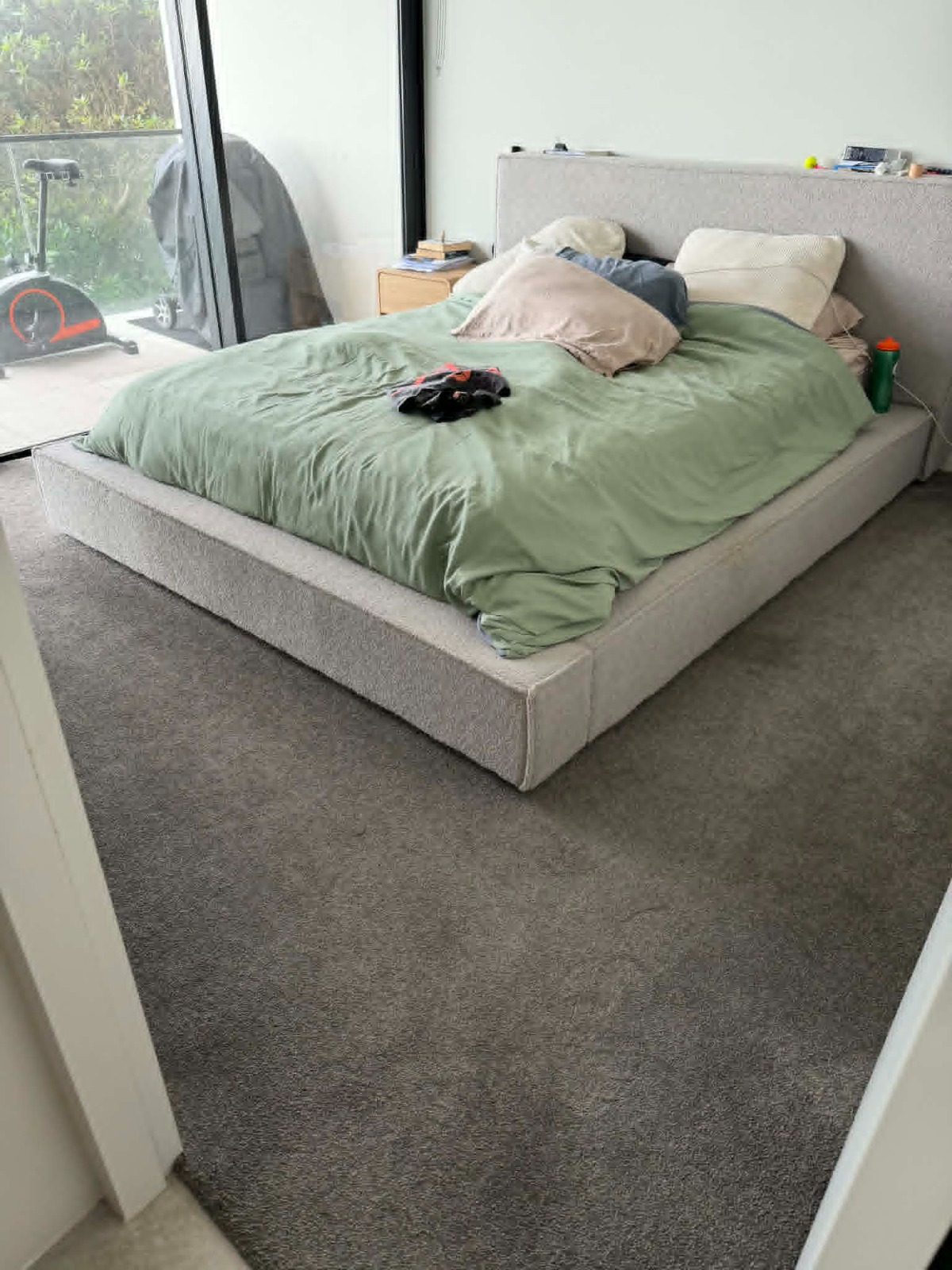
Dust mites need humidity above 50% to survive. They live wherever skin collects in significant quantity, which is mostly the bed. A single mattress that's been in regular use for two years contains millions of them. The fact that you can't see them doesn't mean they're not there. The fact that you've never noticed them doesn't mean they're not triggering your asthma or year-round hay fever. Same goes for persistent eczema.
We run regular maintenance cleans for households dealing with allergies, and dust mite cleaning is the request we get more than almost any other allergy-related issue. Most of the advice online is either wrong or copied from an overseas source that doesn't apply to humid climates. Some of it is sold by someone with a HEPA vacuum to push. Here's what actually works.
Where Dust Mites Actually Live
Dust mites eat shed human skin. They live wherever skin collects, which is mostly the bed. Pillows are second. Carpet under the bed is third. Upholstered furniture and curtains come further down the list.
Walking through a room or shaking out a duvet doesn't kill them. Cold washing doesn't kill them. Vacuuming alone doesn't kill them either, and a non-HEPA vacuum makes things worse by aerosolising the allergen.
The Australasian Society of Clinical Immunology and Allergy (ASCIA) publishes the most thorough guide to allergen minimisation, and the key technical point in it is the temperature threshold. Dust mites die at 60°C. Anything cooler than that and they survive the wash.
The Bedroom Cleaning Method We Use
Step 1: Wash the bedding at 60°C or hotter
Sheets and pillowcases. Doona cover too. Once a week if anyone in the house has allergies, fortnightly otherwise. The water temperature is what matters. Cold wash with an "anti-mite" laundry liquid does almost nothing. The chemical claims don't survive contact with real-world dust mite loads.
If your washing machine doesn't have a 60°C setting, run the hottest cycle and add a 10-minute hot tumble dry afterward. Heat above 55°C for a sustained period is what kills them.
Step 2: Encase the mattress and pillows
This is the single most effective intervention for dust mite allergies and almost nobody does it. Get zippered allergen-proof encasements for the mattress and pillows. The doona too if you're serious. Tightly woven fabric, sealed seams. They trap the mites already in there and stop new ones taking up residence.
Decent encasements cost $40 to $80 per pillow and $150 to $250 for a queen mattress. Cheap ones with plastic backing rip within a year and don't breathe, so the sleep is bad. Protect-A-Bed or AllerZip are the brands we recommend if you want something that lasts.
Step 3: Vacuum properly, not constantly
A vacuum without a HEPA filter spreads dust mite allergen rather than removing it. The fine particles pass straight through the bag or filter and back into the room. If you have allergies and you're vacuuming with a basic Hoover, you're making things worse.
A sealed HEPA system traps the allergen. Dyson V-series sealed models and Miele C3 with the HEPA AirClean filter both work well. Bosch makes equivalent sealed units too. Don't trust "HEPA-grade" marketing on cheap stick vacuums. Look for a properly sealed system rating.
Vacuum the bedroom carpet and the mattress surface weekly. Don't forget the base of the bed. If you're allergic, wear a P2 mask while doing it, or get someone else to vacuum and stay out of the room for 20 minutes after.
Step 4: Damp dust hard surfaces
Dry dusting flicks allergen into the air. Damp microfibre with plain water or a mild detergent picks it up and holds it. Skirting boards, bed frame, side tables, wardrobe shelves. Fortnightly at minimum.
Step 5: Reduce humidity in the bedroom
This is the long term play. If you can keep bedroom humidity below 50%, dust mite populations crash. In humid climates that's harder, but a dehumidifier set to 45% running overnight makes a real difference. Run it from late spring through autumn at minimum.
Air conditioning helps too because cooling air reduces its water content. Reverse cycle on cool dehumidifies as a side effect.
Step 6: Strip the unnecessary fabric
Heavy curtains are dust mite hotels. So are upholstered bed heads and decorative throw pillows that never get washed. If allergies are bad, replace heavy curtains with blinds (washable cloth or hard slats). Switch upholstered bed heads for timber or metal. The decorative cushions go to the linen cupboard, not the bed.
This isn't a minimalism pitch. It's substrate reduction. Less fabric in the bedroom means less surface area for mites to colonise.
Step 7: Soft toys go in the freezer
Kids' soft toys can't usually be washed at 60°C without damaging them. Put them in a sealed plastic bag and into the freezer for 24 hours every fortnight. Cold kills the live mites. Then wash on a normal cycle to remove the dead mites and the allergen residue.
Yes, this sounds ridiculous. It's what works.
What Doesn't Work
Eucalyptus oil sprays as a single intervention. They have some effect but only at concentrations and dwell times beyond what a household spray can achieve.
UV wands. Marketing product. UV doesn't penetrate fabric far enough to reach the mites inside a mattress.
Steam cleaning a mattress on its own. Steam is hot enough but only at the surface. Mites burrow deeper than the steam reaches, and the residual moisture can actually grow mould inside the mattress if it doesn't dry fast enough. Steam has a place inside a wider protocol but not as a standalone fix.
"Hypoallergenic" mattresses. The marketing claim is loose and many of them still allow mites to colonise within 18 months.
When Professional Cleaning Helps
A standard fortnightly house cleaning service can substantially reduce dust mite allergen if the cleaner uses the right method. HEPA-filter vacuum. Damp microfibre on hard surfaces. Attention to skirtings and bed frames. Bedroom done first while it's least disturbed. Most cleaners don't do this. Ask before you book.
Professional residential cleaning won't replace mattress encasements or hot washing of bedding. Those are user responsibility. What it does is keep the substrate population from building back up between deep cleans.
For severe allergies, especially in young children, talk to your GP and request a referral to a clinical immunologist. Cleaning alone can't fix a confirmed allergy, but it can dramatically reduce trigger load.
If you'd rather have a cleaning team handle the routine, our general cleaning service covers HEPA vacuuming and proper dust handling as standard.