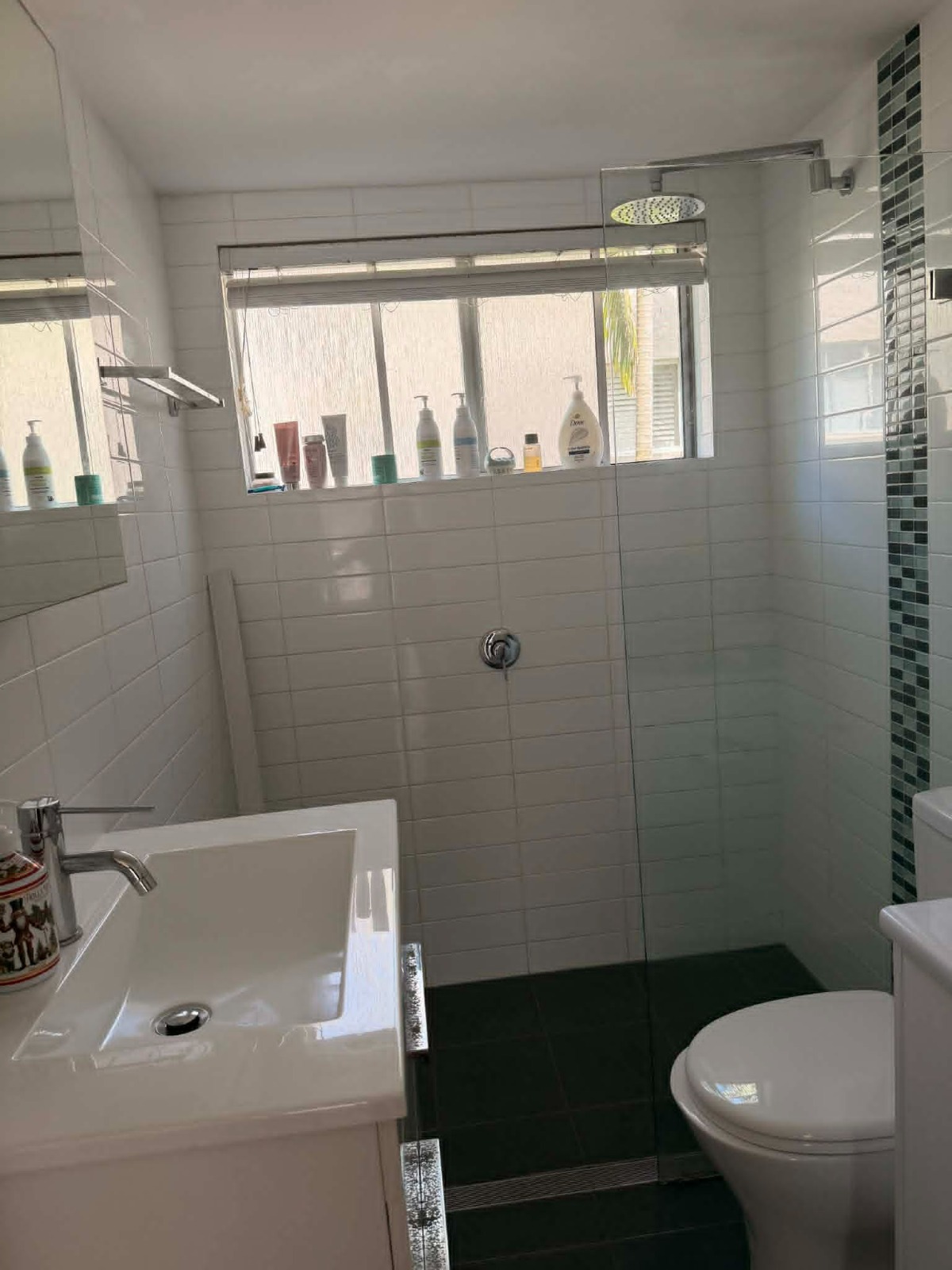
A Sydney apartment is a different cleaning brief to a Sydney house. Smaller floor area but higher proportion of hard surface. Internal bathrooms with no window in a lot of buildings, which means undersized ventilation. Shared walls and floors that affect moisture transfer. Less storage so daily soil accumulates faster. Limited outdoor space which becomes its own problem.
Most cleaners run the same method on both apartments and houses, and the apartment ends up under-cleaned in the spots that actually matter. We do regular house cleaning Sydney wide across both housing types, and the problems below are the ones that don't exist in a standard house.
Problem 1: Internal Bathrooms With Undersized Ventilation
A lot of Sydney apartment buildings, especially mid-rise stock from the 90s through to recent builds, have bathrooms with no external window. The only ventilation is an extractor fan that's often undersized for the room and routinely under-maintained.
In Sydney's coastal humidity, an internal bathroom without working extraction becomes a mould factory. The Victorian Building Authority has a detailed guide on condensation, moisture damage and mould that explains the mechanism clearly. When moisture-laden air hits a cold surface and the temperature drops below dew point, water droplets form. In a sealed apartment bathroom, every shower creates a fresh layer of condensation. Without ventilation, that moisture sits there for hours.
The cleaning implications are direct. The extractor fan cover needs to come off monthly and the grille and housing get cleaned properly. Most apartments have never had this done in years of occupancy. Grout and silicone need a fungicidal pass every fortnight rather than monthly. The mirror, the window if there is one, and the underside of cabinets get wiped after every shower if possible.
Problem 2: Single-Zone Air Across the Whole Apartment
In a house, the rooms have separation. Cooking smells stay mostly in the kitchen. Pet hair drifts but doesn't reach the whole house. In an apartment, especially open-plan ones, every smell and every allergen spreads everywhere within minutes. Cleaning fumes do too.
What this means for cleaning. Strong-smelling chemicals can't be used the way they might be in a house because the apartment doesn't ventilate fast enough. Bleach and oven cleaner need careful timing or substitution. Same with aggressive degreasers. Cooking that produces grease aerosols spreads it across every soft surface in the apartment, which means curtains, sofas, and rugs get a film that you can't see but accumulates fast.
Practical implication. Use pH-neutral or mild products as default. Open all the doors and windows during cleaning. Run the rangehood on max whenever cooking. Wipe down soft furnishings more often than you would in a house.
Problem 3: Compact Spaces Accumulate Soil Faster
A two-bedroom apartment with two occupants generates similar daily soil to a four-bedroom house. But the surface area is half. Which means every surface accumulates dust, grease, and traffic dirt at twice the rate.
The fortnightly cleaning interval that works for a house often fails for an apartment because the soil load resets the baseline faster. Either step up to weekly apartment cleaning intervals, or do a thorough deep-clean component every fortnight rather than a light surface tidy.
Problem 4: Building Infrastructure Brings Dirt In
Apartments share a lobby, lift, hallway, and front door with neighbours. Whatever those common areas track in (dirt, dust, leaf debris, salt residue if coastal), gets carried on shoes through your front door. The first metre inside the apartment door is therefore much dirtier than the equivalent space in a house.
The cleaning fix is a doormat that actually works (coir or hard rubber, washable), an enforced shoes-off rule if you can swing it, and a fortnightly mop of the entry zone separately to the rest of the floor. Also worth a hard look at the strata cleaning of the common areas if the lobby and lift always seem grubby. Section 106 of the Strata Schemes Management Act 2015 requires owners corporations to maintain common property properly, and that includes cleaning.
Problem 5: Balconies Become Coastal Dust and Salt Catchers
Sydney apartment balconies, especially in coastal suburbs, accumulate windblown sand and salt residue at a rate the daily occupant doesn't notice. Urban dust adds to it. Then it gets tracked inside on shoes and pet paws.
Balcony tiles need a hose down monthly, a proper scrub quarterly. Glass balustrades fortnightly. Salt residue on metal railings needs wiping down before it corrodes. Inland apartments don't have the salt problem but still accumulate windblown dust and pollen.
Problem 6: Internal Laundry Creates Apartment-Specific Humidity
Most Sydney apartments have an internal or euro laundry rather than a separate laundry room with external ventilation. A washing machine and dryer in a small enclosed space generates significant humidity. The dryer in particular pumps warm moist air into the apartment unless it's properly vented.
Cleaning implications. Wipe the washing machine seal weekly because that's where mould starts in apartment laundries. Run the dryer with the bathroom or laundry door open. Clean the lint filter every cycle (most people don't). Check the dryer vent and hose every six months for build-up. If the apartment doesn't have an external dryer vent, consider whether a condenser or heat-pump dryer would suit better.
Problem 7: Heritage Apartments Have Different Rules
Older converted apartments in suburbs like Potts Point, Surry Hills, and Newtown often have original timber floors with shellac or wax finishes, plus original cornices and architraves. Pre-1970 paint that may contain lead is another layer. Modern cleaning products and methods damage these surfaces.
A modern apartment cleaner approach with aggressive degreasers and abrasive scourers wrecks heritage finishes. Heavy water mopping too. Heritage apartments need pH-neutral cleaning across the board. Damp microfibre instead of soaking wet mops. No vinegar or citrus on natural stone. Original timber floors need the manufacturer's recommended product, usually Bona for shellac or a wax-specific cleaner if the floor is genuinely waxed.
Frequency for Sydney Apartments
Weekly: vacuum and mop all floors, full bathroom clean, kitchen including stovetop and splashback, change bedlinen.
Fortnightly: damp dust all hard surfaces, vacuum upholstery, wipe inside cupboards, check washing machine seal.
Monthly: pull bathroom extractor fan cover and clean, run hot cycle through washing machine drum, defrost mini-bar style fridges if you have one, wash front of appliances properly.
Quarterly: oven deep clean, fridge full clean out and behind it, balcony scrub down, professional carpet steam clean if there are pets or allergies.
This is more frequent than the equivalent house schedule because of the higher accumulation rate.
When Professional Cleaning Helps
A professional apartment cleaning team that understands apartment-specific problems handles the spots a generic cleaner misses. Extractor fans pulled apart. Washing machine seals checked. Heritage finishes treated correctly. Balconies done as part of the standard scope.
A regular cleaner who treats your apartment like a smaller version of a house is leaving the apartment-specific problems unaddressed. Ask before you book. If the answer doesn't mention extractor fans and balconies, you're getting the generic method. The laundry seal is another check.
If you'd rather have a cleaning team that knows what a Sydney apartment actually needs, our residential cleaning service covers apartments specifically as part of the standard scope.