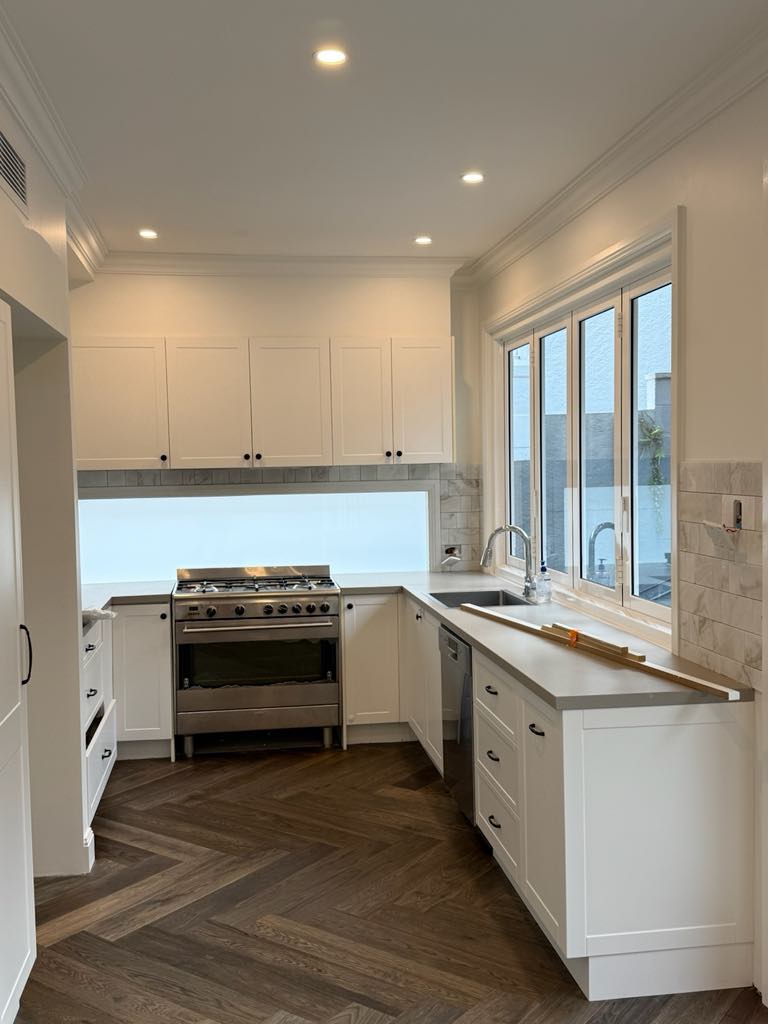
This isn't just about appearances. The kitchen is the primary source of food contamination risk in any home. The NSW Food Authority recommends keeping benches, equipment and surfaces clean and dry every time food is prepared - because bacteria from food residue, grease and moisture can accumulate on surfaces quickly and in ways that aren't always visible. You can read more about kitchen hygiene standards at foodauthority.nsw.gov.au.
A deep clean addresses the buildup that regular maintenance cleaning doesn't reach - inside appliances, behind equipment, underneath everything and in the gaps and joins where grease and food particles accumulate over time.
What You'll Need
Getting everything ready before you start saves time and means you won't stop halfway through:
- Degreaser or diluted dish soap for surfaces and appliances
- Bicarb soda and white vinegar for stubborn buildup
- Oven cleaner for the oven interior
- Microfibre cloths - several, as you'll go through them
- An old toothbrush for joins, grout and tight spaces
- Rubber gloves
- A bucket and mop for floors
- A scrubbing sponge for the sink
The Right Order to Deep Clean a Kitchen
Order matters in a kitchen deep clean. Cleaning in the wrong sequence means redistributing grime onto surfaces you've already cleaned.
1. Clear everything out first
Before any cleaning starts, clear the benchtops completely. Remove everything from the stovetop, take items off shelves and pull appliances away from walls. You can't properly clean a surface that has things sitting on it, and moving appliances away from walls is the only way to reach the grime and dust that accumulates behind them.
2. Start at the top and work down
Dust and debris fall during cleaning. Starting high and working toward the floor means you're not cleaning the same surfaces twice.
Begin with:
- Rangehood filters - these accumulate grease faster than almost anything else in the kitchen. Remove the filters and soak them in hot water with a degreaser for at least 20 minutes. Wipe down the exterior of the rangehood while the filters soak.
- Top of wall cabinets - a layer of greasy dust accumulates on top of overhead cabinets that most people never see. Use a damp microfibre cloth to wipe this down before cleaning anything below.
- Light fittings and exhaust vents - dust these down before moving to surfaces below.
3. Oven and stovetop
These are the most time-intensive parts of a kitchen deep clean and benefit most from letting products do the work rather than scrubbing immediately.
For the oven:
- Remove the racks and soak them in hot soapy water in the sink or bathtub
- Apply oven cleaner to the interior and close the door - leave it for the time specified on the product, usually at least 30 minutes for heavy buildup
- While the oven cleaner works, scrub the racks with a scouring pad
- Wipe out the oven interior thoroughly once the cleaner has had time to work - you'll likely need several passes with a damp cloth to remove all residue
For the stovetop:
- Remove burner grates or hotplate covers and soak in hot soapy water
- Spray the stovetop surface with degreaser and let it sit for a few minutes before wiping
- For baked-on residue, a paste of bicarb soda and a small amount of dish soap applied directly and left for 10 minutes before scrubbing works well without scratching the surface
- Gas burner heads can be soaked in white vinegar to clear blocked holes - use a toothpick or pin to clear any that remain blocked after soaking
4. Cabinets - inside and out
Cabinet exteriors near the stovetop accumulate a layer of grease over time that regular wiping doesn't fully address. Use a degreaser applied to a cloth rather than sprayed directly onto the cabinet - excess liquid in joins and hinges can cause damage over time.
For the inside of cabinets - empty them completely, wipe down all interior surfaces and check for any expired products, crumbs or spills at the back. This is worth doing thoroughly at least once or twice a year.
5. Benchtops and splashback
With the overhead work done, clean benchtops thoroughly with a suitable cleaner for your surface type. Stone benchtops need a pH-neutral cleaner - avoid vinegar or acidic cleaners on stone as they can cause etching over time. Laminate and tile surfaces handle most standard cleaners without issue.
The splashback behind the stovetop is often the most neglected surface in a kitchen. Grease and cooking residue builds up here consistently and benefits from a degreaser rather than a general surface spray.
6. Sink and tapware
The kitchen sink is used constantly but rarely cleaned as thoroughly as other surfaces. For a proper deep clean:
- Scrub the entire sink basin including the drain surround with a suitable cleaner
- Pay attention to the join between the sink and benchtop where grime accumulates
- Soak the drain strainer in white vinegar or a diluted bleach solution
- Clean the tapware and the base of taps where limescale and residue collect - a toothbrush is the right tool here
- Run a cycle of your dishwasher empty on the hottest setting to clean the interior
7. Fridge exterior and handles
Fridge handles are one of the highest-contact surfaces in any kitchen and are frequently missed during regular cleaning. Wipe down the entire exterior of the fridge including the top, sides and door seals. Door seals in particular accumulate mould and food residue in the folds - use a toothbrush with a diluted bleach solution to clean these thoroughly.
8. Floors last
Always mop the kitchen floor last. Everything you've done above will have dropped debris, water and product residue onto the floor. Sweep or vacuum first to pick up loose debris before mopping - mopping over crumbs and dust just moves them around rather than removing them.
Pay particular attention to the area under and behind appliances, the joins between flooring and kickboards, and the area in front of the sink which tends to accumulate the most residue.
Areas Most People Miss
Even thorough home cleaning tends to skip a few spots consistently:
- Inside the microwave - heat a bowl of water with lemon juice inside to loosen residue, then wipe down the interior walls, turntable and ceiling
- The gap between the oven and benchtop - use a thin cloth or a butter knife wrapped in a cloth to clean this gap
- Rangehood filters - as mentioned above, these are almost always overdue for cleaning
- The top of the fridge - collects dust and grease from cooking steam
- Cabinet hinges and handles - touched constantly but rarely wiped down
How Often Should You Deep Clean Your Kitchen
A maintenance clean of kitchen surfaces should happen after every use - wiping down the stovetop, benches and sink daily prevents significant buildup.
A proper deep clean of the kind described in this guide is realistic every 3 to 6 months for most households depending on how heavily the kitchen is used.
For households that cook frequently or have multiple people using the kitchen daily, quarterly deep cleans are more appropriate. For lighter use households, twice a year covers most of what accumulates between maintenance cleans.
When a Professional Clean Makes Sense
Some kitchen situations benefit from professional help - heavily built up oven interiors, grease accumulation that has become embedded in surfaces over time, or simply when a kitchen hasn't been properly deep cleaned in a long time and needs a full reset. For a thorough professional kitchen deep clean, learn more about our deep cleaning service.
For professional home cleaning across Sydney, visit 👉 https://www.crystalcleansydney.com.au/